Automotive Air Conditioning & Heating Repair in Tampa
Reliable A/C & Heating Diagnostics and Repair
Your vehicle’s heating and air conditioning system does much more than keep you comfortable. It relies on a combination of mechanical, electrical, electronic, and refrigerant components that must all work together properly.
When your A/C stops blowing cold, your heater only blows lukewarm air, the airflow becomes weak, or the system behaves inconsistently, replacing a random component isn't always the answer. Proper diagnosis is necessary to determine why the system isn't operating correctly.
At David’s Complete Auto Repair, we diagnose and repair automotive heating and air conditioning systems using professional diagnostic equipment, refrigerant recovery and charging equipment, pressure testing, electrical testing, temperature measurements, and hands-on inspection.
Whether your vehicle is blowing warm air, losing refrigerant, making unusual noises, overheating while the A/C is running, or simply isn't performing like it should, our technicians can determine what is happening and recommend the appropriate repair.
Complete Automotive A/C & Heating Services
We service the complete heating and air conditioning system, including:
A/C diagnostics
A/C performance testing
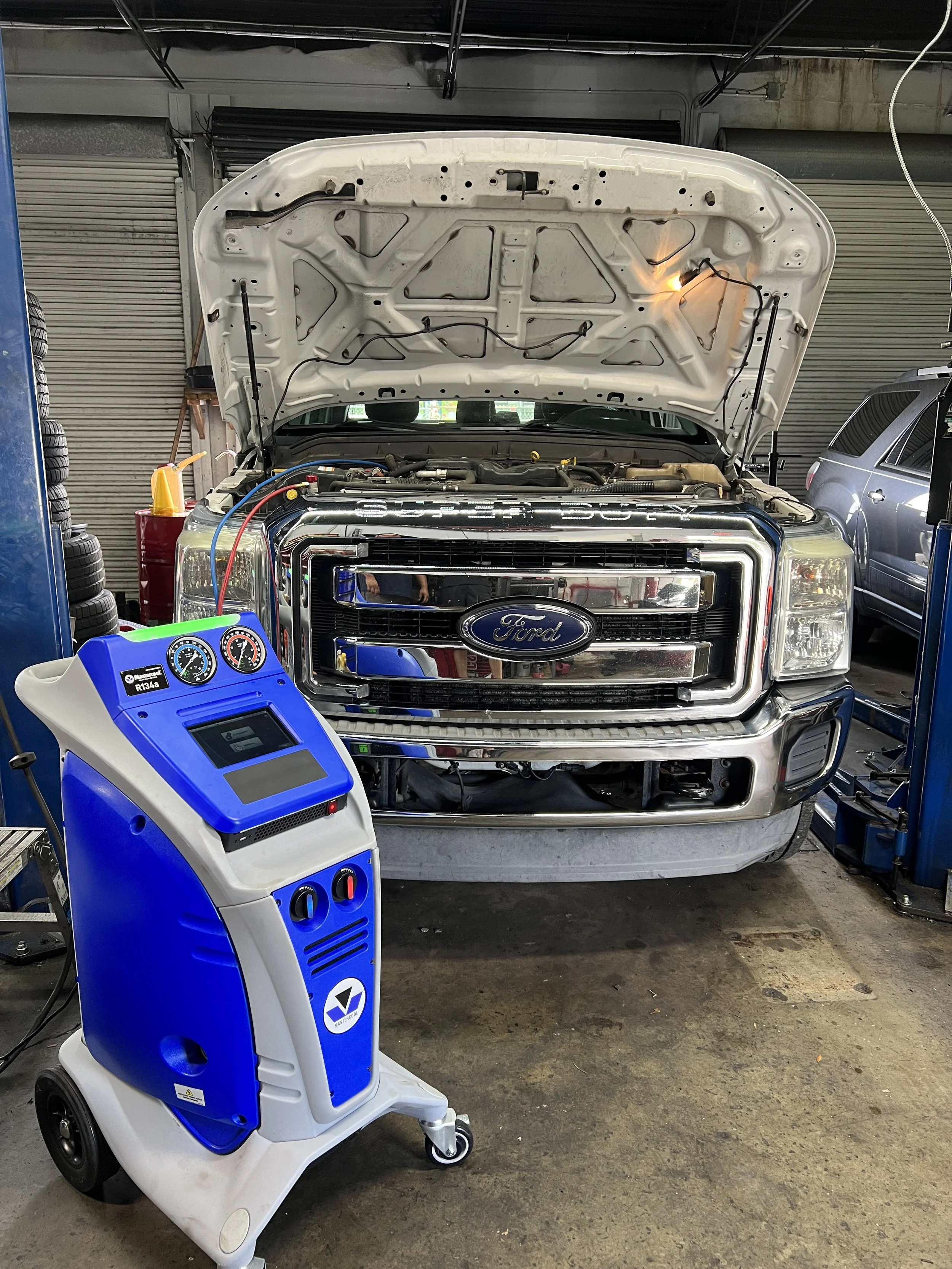
A/C refrigerant recovery and recharge
R-134a A/C service
R-1234yf A/C service
A/C refrigerant leak diagnosis
Electronic leak detection
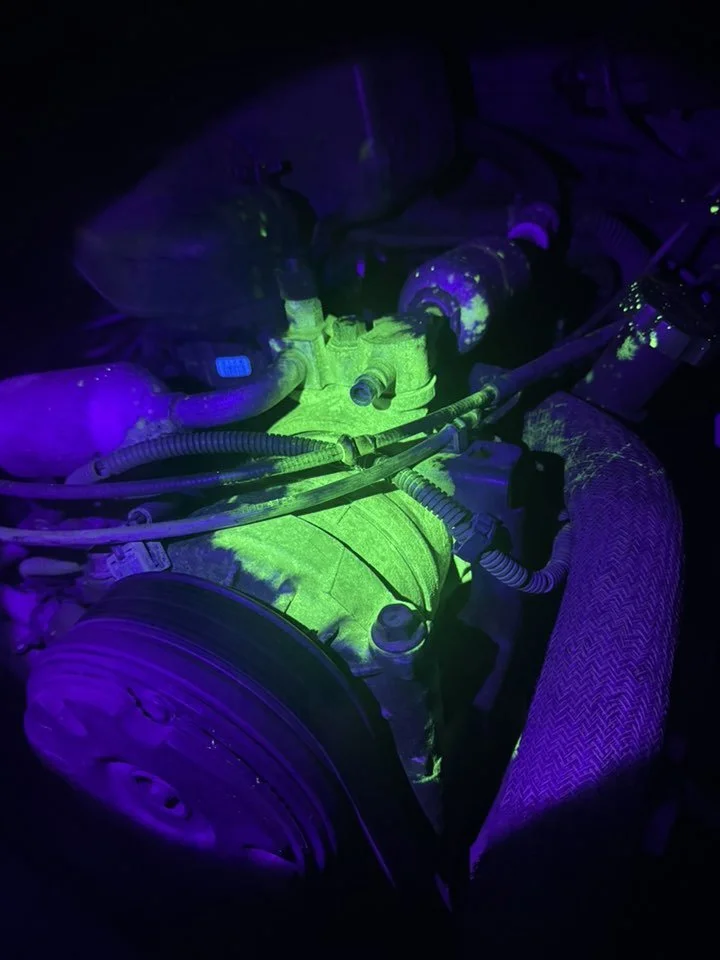
UV dye leak detection
A/C compressor diagnosis and replacement
A/C condenser replacement
A/C evaporator diagnosis and replacement
Expansion valve replacement
Orifice tube replacement
Receiver-drier replacement
Accumulator replacement
A/C pressure testing
A/C electrical diagnostics
Blower motor diagnosis and replacement
Blower motor resistor diagnosis and replacement
HVAC control diagnosis
Heater core diagnosis
Heater core replacement
Heater hose repair
Thermostat diagnosis
Cooling system diagnosis
HVAC actuator diagnosis
Blend door diagnosis
Mode door diagnosis
Cabin air filter replacement
Defrost system diagnosis
Dual-zone climate control diagnosis
Rear A/C diagnosis and repair
Heating system diagnosis and repair
How Your Vehicle's A/C System Works
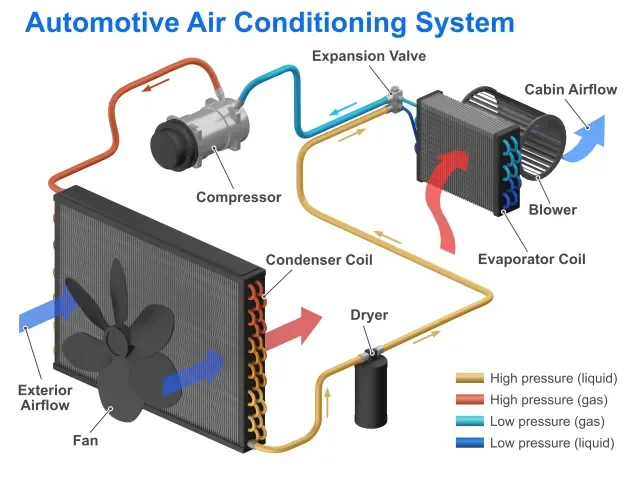
An automotive air conditioning system uses refrigerant to transfer heat from inside the passenger compartment to the outside of the vehicle.
Although the system may seem simple from inside the vehicle, several components must operate correctly for the system to produce cold air.
The basic A/C system consists of:
A/C Compressor
The compressor circulates refrigerant through the system and creates the pressure difference necessary for the refrigeration cycle.
Depending on the vehicle, the compressor may be driven by a traditional electromagnetic clutch, a variable-displacement design, or an electronically controlled system.
A compressor can fail mechanically, electrically, or internally.
A compressor that isn't producing the correct pressure difference may cause poor cooling even when the system contains the correct amount of refrigerant.
Condenser
The condenser is located toward the front of the vehicle, usually near the radiator.
Hot, high-pressure refrigerant leaves the compressor and enters the condenser. Air flowing through the condenser removes heat from the refrigerant, allowing it to change from a high-pressure gas into a high-pressure liquid.
A restricted, damaged, contaminated, or poorly cooled condenser can cause excessive high-side pressure and reduced A/C performance.
This is one reason condenser airflow is important.
Cooling fans, fan motors, relays, wiring, and control modules can all affect A/C operation.
Expansion Valve or Orifice Tube
The expansion device controls the amount of refrigerant entering the evaporator and creates the pressure drop necessary for the refrigerant to absorb heat.
Depending on the vehicle, this may be an expansion valve or a fixed orifice tube.
A restricted expansion device can cause unusual pressure readings, poor cooling, evaporator icing, or insufficient refrigerant flow.
Evaporator
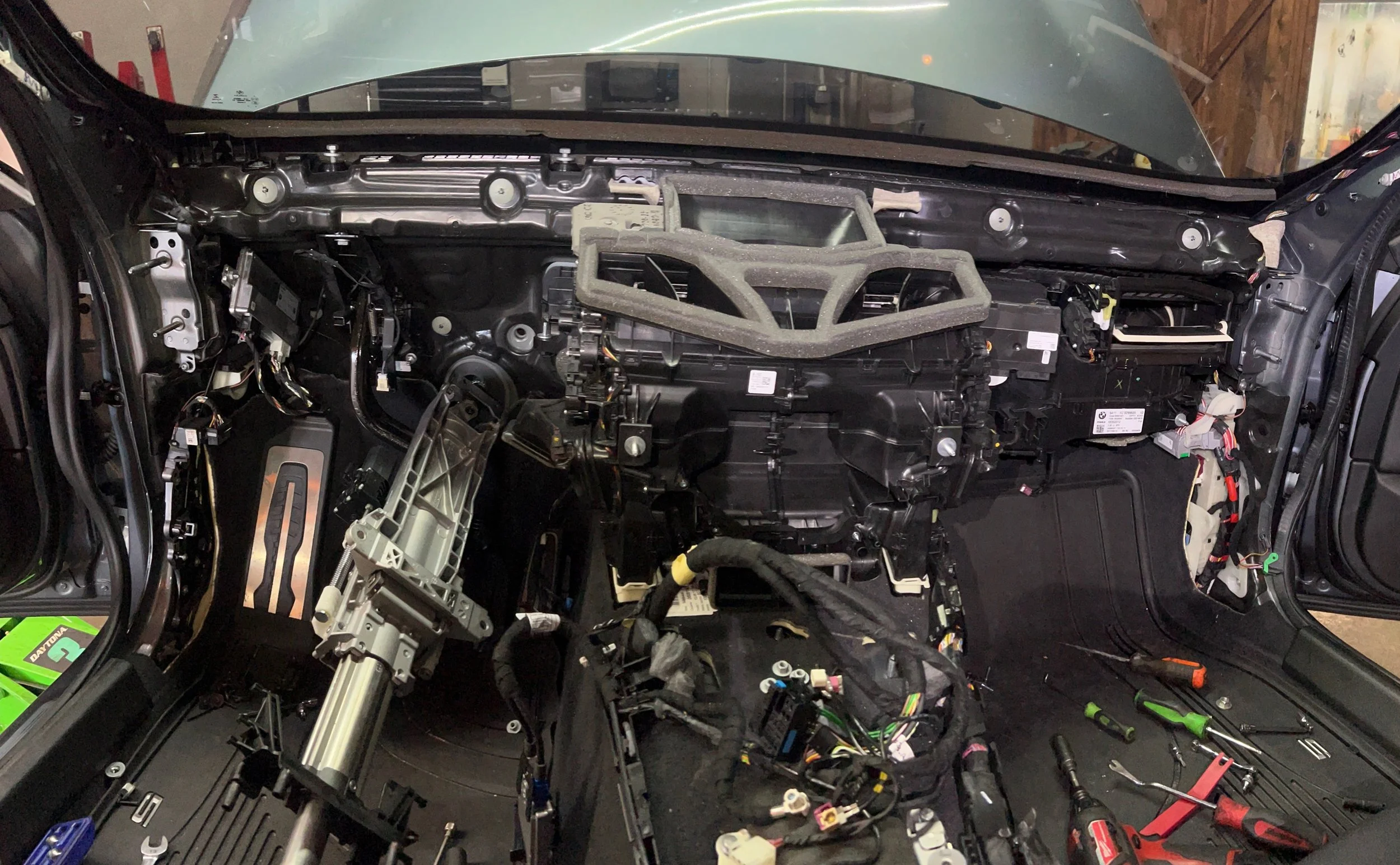
The evaporator is located inside the HVAC housing, usually underneath or behind the dashboard.
Low-pressure refrigerant enters the evaporator and absorbs heat from the air passing through it.
The cooled air is then directed into the passenger compartment.
Because the evaporator is hidden inside the dashboard, diagnosing an evaporator problem can sometimes require pressure testing, temperature measurements, leak testing, and additional inspection before determining whether removal is necessary.
Blower Motor
The blower motor moves air through the HVAC system and into the cabin.
A vehicle can have a perfectly functioning A/C refrigeration system and still have poor cooling if the blower motor isn't moving enough air.
A weak blower motor, failing resistor or control module, clogged cabin filter, wiring problem, or HVAC control issue can all cause weak airflow.
Why Your A/C May Blow Warm
There isn't one single reason an automotive A/C system stops blowing cold.
Common causes include:
Low Refrigerant
Refrigerant doesn't normally disappear simply because the vehicle gets older.
If the refrigerant level is low, there is usually a reason.
A leak can occur at:
Hose connections
O-rings
Service ports
Condenser
Compressor
Evaporator
Accumulator
Receiver-drier
Refrigerant lines
Adding refrigerant may temporarily restore cooling, but if the system has a leak, the problem will eventually return.
That's why proper leak diagnosis is important.
Refrigerant Overcharge
More refrigerant does not necessarily mean colder air.
An overcharged system can produce excessive high-side pressure and actually reduce cooling performance.
It can also place additional stress on the compressor and other components.
Proper refrigerant quantity should be based on the vehicle manufacturer's specified charge amount.
Compressor Problems
A compressor can fail in several ways.
It may:
Fail to engage
Have a damaged clutch
Have an electrical problem
Produce insufficient pressure
Have internal mechanical damage
Become noisy
Have a control valve failure
Develop an internal restriction
A compressor should not automatically be condemned simply because the A/C isn't cold.
The rest of the system needs to be tested first.
Condenser Airflow Problems
The condenser depends on airflow to remove heat from the refrigerant.
If a cooling fan isn't operating correctly, the condenser is obstructed, or airflow is severely restricted, A/C performance can suffer.
This can be particularly noticeable when the vehicle is sitting still or idling.
A vehicle that produces cold air while driving but warm air at idle may have an airflow or cooling fan problem, although other causes are possible.
Blend Door or HVAC Control Problems
Sometimes the refrigeration system is working correctly but cold air isn't reaching the cabin.
Modern HVAC systems use electrically controlled doors to regulate air temperature and airflow.
A malfunctioning blend door actuator, mode actuator, HVAC control module, wiring problem, or broken door can cause the system to blow warm air even when the A/C system itself is producing cold refrigerant temperatures.
Why Your A/C Might Work Sometimes and Stop Other Times
Intermittent A/C problems can be particularly difficult to diagnose.
The system may work perfectly for several minutes and then stop cooling.
Possible causes include:
Low refrigerant
Compressor control problems
Pressure sensor issues
Compressor clutch problems
Cooling fan problems
Electrical faults
Overheating
Evaporator icing
HVAC actuator problems
Control module faults
Intermittent wiring connections
Variable-displacement compressor problems
This is why simply checking whether the compressor turns on isn't always enough.
A proper diagnosis may require monitoring system pressures, temperatures, electrical signals, compressor operation, fan operation, and HVAC controls while the problem is occurring.
A/C Short Cycling
A/C short cycling occurs when the compressor repeatedly turns on and off when it shouldn't.
A small amount of cycling can be normal on some systems.
Rapid or excessive cycling, however, can indicate a problem.
Possible causes include:
Low refrigerant
Incorrect refrigerant charge
Pressure switch or pressure sensor problems
Evaporator temperature issues
Compressor control problems
Electrical faults
Evaporator icing
HVAC control problems
The frequency and conditions of the cycling matter.
For example, a compressor cycling every several seconds is very different from normal cycling during steady-state operation.
Proper diagnosis requires understanding the system's pressures, temperatures, controls, and operating conditions.
A/C Refrigerant Leaks
One of the most common reasons a vehicle eventually stops producing cold air is refrigerant loss.
A refrigerant leak can be difficult to locate because the leak may be extremely small.
Common leak locations include:
Condensers
Compressor shaft seals
Compressor housings
Hose fittings
O-rings
Service ports
Evaporators
Accumulators
Receiver-driers
Refrigerant lines
We can use appropriate leak-detection methods to help locate the source of refrigerant loss.
Depending on the vehicle and system, diagnosis may involve electronic leak detection, UV dye, pressure testing, visual inspection, or a combination of methods.
R-134a vs. R-1234yf
Different vehicles use different refrigerants.
Older vehicles commonly use R-134a, while many newer vehicles use R-1234yf.
These refrigerants are not interchangeable.
The correct refrigerant must be determined from the vehicle's specifications and A/C service information before servicing the system.
R-1234yf systems also use specialized service equipment and procedures.
Using the wrong refrigerant or incorrect service procedure can cause system problems and potentially contaminate refrigerant recovery equipment.
A/C Recharge vs. A/C Repair
An A/C recharge and an A/C repair are not necessarily the same thing.
If a system is low on refrigerant, adding refrigerant may restore cooling temporarily.
But refrigerant loss generally indicates a leak or another system problem.
A proper A/C service should determine:
How much refrigerant is currently in the system
Whether the system has a leak
Whether the compressor is operating correctly
Whether the high- and low-side pressures are appropriate
Whether condenser airflow is sufficient
Whether the evaporator is operating correctly
Whether the HVAC controls are functioning correctly
Whether the system produces the expected vent temperature
Simply adding refrigerant without determining why the system is low may result in the same problem returning.
Why A/C Pressure Readings Matter
Technicians often use high-side and low-side pressure readings as part of the diagnostic process.
However, pressure readings should not be interpreted by themselves.
System pressures can change based on:
Outside temperature
Humidity
Engine RPM
Refrigerant charge
Condenser airflow
Evaporator temperature
Compressor operation
Vehicle design
System load
For that reason, there isn't one universal "correct" A/C pressure that applies to every vehicle.
Pressure readings should be evaluated alongside vent temperature, ambient temperature, system operation, compressor behavior, airflow, and manufacturer specifications.
Your Heater Is Part of the HVAC System
Heating problems are not always caused by the heater itself.
Your vehicle's heating system generally uses engine coolant to transfer heat into the passenger compartment.
Hot engine coolant flows through the heater core, and the HVAC blower moves air across it.
The warmed air is then directed into the cabin.
Problems with any of these components can affect heating performance.
Common Causes of Poor Heater Performance
Low Coolant
If the cooling system is low on coolant, the heater may not receive enough hot coolant to produce adequate heat.
A low coolant level can also indicate a leak that needs to be diagnosed.
Thermostat Problems
The thermostat controls engine operating temperature.
If the thermostat is stuck open, the engine may run too cool and the heater may produce insufficient heat.
If the thermostat is stuck closed, the engine may overheat.
Restricted Heater Core
A restricted heater core can reduce coolant flow and cause poor heat output.
One possible symptom is a significant temperature difference between the heater core inlet and outlet hoses.
Further testing is necessary to determine whether restriction is actually present.
Heater Control Valve
Some vehicles use a heater control valve to regulate coolant flow through the heater core.
If the valve becomes stuck or fails electrically, the heater may not receive the correct amount of coolant.
Blend Door Problems
Even when the heater core is hot, a malfunctioning blend door can prevent heated air from entering the passenger compartment.
This is particularly common on vehicles with electronically controlled climate systems.
Don't Just Recharge It — Find the Problem
If your vehicle's A/C is low on refrigerant, the important question isn't simply:
"How much refrigerant does it need?"
The better question is:
"Why did it lose refrigerant?"
Likewise, if your heater isn't producing heat, replacing a thermostat or heater core without confirming the cause can waste time and money.
Proper diagnosis helps identify the failed component or condition before repairs are performed.
At David’s Complete Auto Repair, our goal is to diagnose the actual problem and provide you with the information you need to make an informed repair decision.
A/C & Heating Repair in Tampa, FL
If your car, truck, or SUV isn't keeping you comfortable, David’s Complete Auto Repair can help diagnose the problem.
From a simple A/C performance concern to complex electrical, HVAC, refrigerant, or climate-control problems, our technicians can inspect the system and determine what is required to restore proper operation.
Serving Tampa, FL and surrounding areas.
Call David’s Complete Auto Repair at (813) 500-7200 or schedule your appointment online.
Frequently Asked Questions
How often does car A/C refrigerant need to be recharged?
A properly sealed A/C system does not normally require routine refrigerant recharging. If refrigerant is low, the system should be inspected for a possible leak or other issue.
Why is my A/C cold while driving but warm at idle?
This can be caused by inadequate condenser airflow, cooling fan problems, refrigerant issues, compressor problems, or other system faults. Proper testing is needed to identify the cause.
Why does my A/C blow cold on one side and warm on the other?
On vehicles with dual-zone climate control, this can be caused by a blend door or actuator problem. Refrigerant level and other system conditions should also be checked.
Why does my A/C keep turning on and off?
Some compressor cycling is normal, but rapid or excessive cycling can indicate low refrigerant, pressure problems, electrical faults, evaporator temperature issues, or compressor control problems.
Does adding refrigerant fix an A/C leak?
No. Adding refrigerant may temporarily restore cooling, but it does not repair the source of a leak.
What refrigerant does my vehicle use?
Your vehicle should have a refrigerant identification label under the hood. The correct refrigerant should also be confirmed using the vehicle's service information.
Why isn't my heater getting hot?
Possible causes include low coolant, thermostat problems, restricted coolant flow, a restricted heater core, heater control valve problems, blend door issues, or other HVAC faults.
Why is my airflow weak even though the A/C is cold?
Weak airflow can be caused by a clogged cabin air filter, blower motor problem, blower control issue, HVAC door problem, or restriction within the HVAC system.
Can an A/C problem cause my engine to overheat?
It can contribute to overheating if there is a problem with condenser airflow, cooling fans, or another component shared by the A/C and engine cooling systems. An overheating vehicle should be diagnosed promptly.
Explore Our ServicesLooking for reliable A/C service you can trust? At David’s Tire Shop, we combine expert knowledge with a commitment to keeping our customers comfortable all year long. Learn more about who we are, our team, and why drivers choose us by visiting our About Us page.