
Cooling System Repair in Tampa, FL
Your vehicle's cooling system plays a critical role in controlling engine temperature and protecting the engine from overheating. A cooling system problem can begin with something as simple as a small coolant leak or worn hose and eventually lead to serious engine damage if left unresolved.
We provide cooling system inspections, diagnosis, and repairs for cars, trucks, and SUVs throughout Tampa and the surrounding area. Whether you're dealing with an overheating engine, coolant leak, low coolant level, or inconsistent operating temperature, proper diagnosis can help identify the source of the problem and determine the right repair.
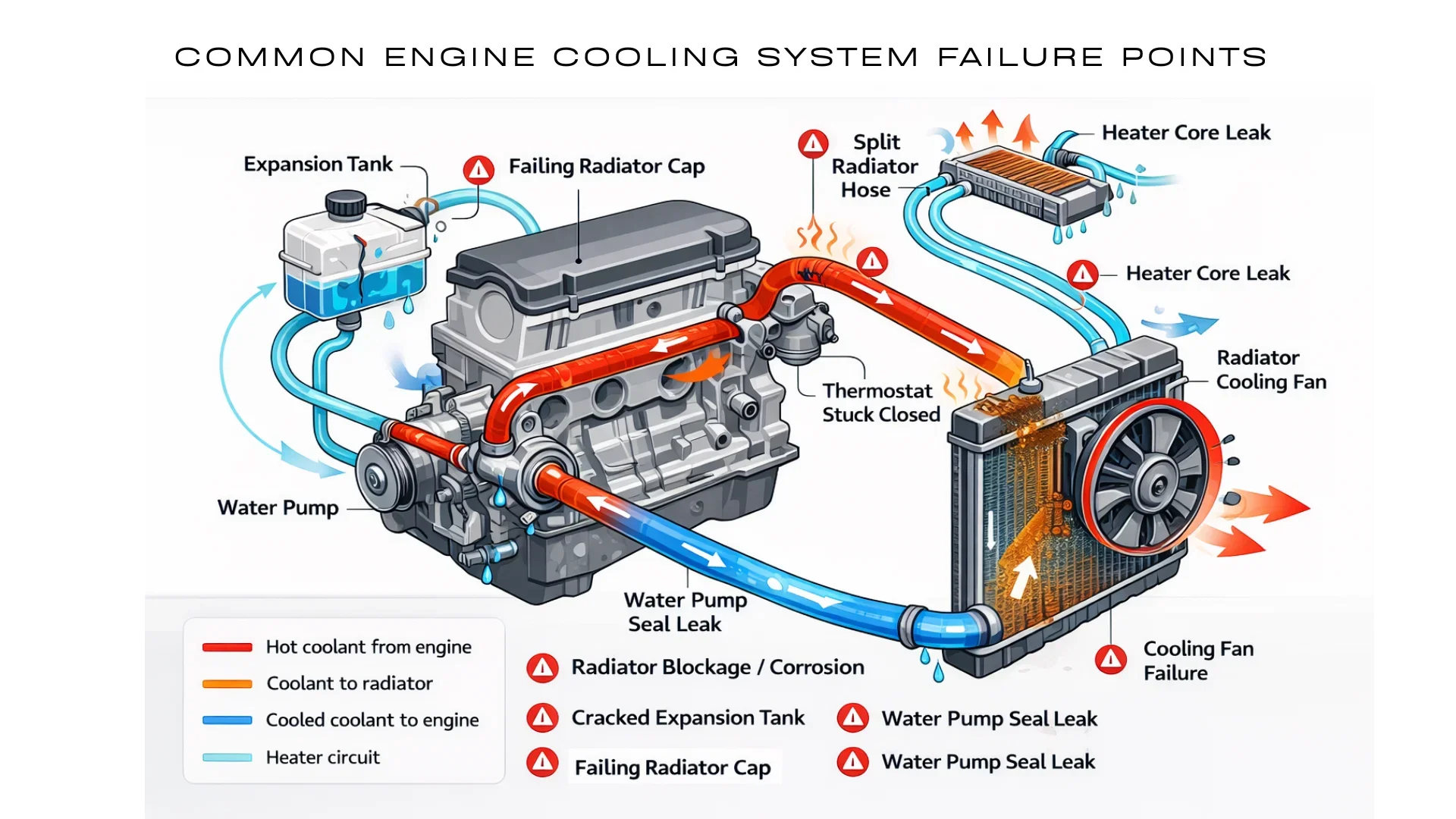
How Your Vehicle's Cooling System Works
The cooling system circulates coolant through the engine to absorb and transfer heat away from internal engine components. The heated coolant then passes through the radiator, where heat is released before the coolant returns to the engine.
Several components work together to maintain the proper operating temperature, including:
Radiator
Water pump
Thermostat
Cooling fans
Radiator and heater hoses
Coolant reservoir
Radiator cap
Temperature sensors
A failure in any of these components can affect the cooling system's ability to regulate engine temperature.
Cooling System Inspection & Diagnosis
An overheating vehicle doesn't necessarily have a bad radiator, and simply replacing a component without identifying the underlying problem can lead to unnecessary repairs.
A proper cooling system diagnosis may include checking coolant level and condition, inspecting for visible leaks, testing system pressure, monitoring engine temperature, checking cooling fan operation, and evaluating the thermostat and water pump.
Depending on the symptoms, additional testing may be necessary to determine whether coolant is entering areas where it shouldn't or whether an internal engine problem is contributing to the overheating condition.
Radiator Repair & Replacement
The radiator is responsible for transferring heat from the engine coolant to the surrounding air. Damage, corrosion, internal restrictions, or leaks can reduce its ability to keep coolant temperatures under control.
Radiator problems may show up as:
Visible coolant leaks
Low coolant levels
Overheating
Coolant residue around the radiator
Damaged fins
Cracked plastic tanks
Poor coolant circulation
Depending on the condition of the radiator and the vehicle, repair or replacement may be appropriate.
Water Pump Repair & Replacement
The water pump circulates coolant throughout the engine and cooling system. A failing water pump can reduce coolant circulation and cause the engine to run hotter than normal.
Common signs of a water pump problem can include:
Engine overheating
Coolant leaking near the pump
Coolant residue around the engine
Unusual bearing or pulley noises
Temperature fluctuations
Poor coolant circulation
Some water pumps are driven by the serpentine belt, while others are driven by the timing belt or timing chain system. The correct repair procedure varies considerably by vehicle.
Thermostat Replacement
The thermostat regulates coolant flow through the engine and helps the engine reach and maintain its intended operating temperature.
A thermostat that remains closed can restrict coolant flow and contribute to overheating. A thermostat that remains open can cause the engine to run cooler than intended and may lead to poor heater performance, reduced efficiency, or other drivability concerns.
Because thermostat problems can produce symptoms similar to other cooling system failures, proper diagnosis is important before replacing the component.
Cooling Fan Diagnosis & Repair
Electric and mechanical cooling fans help move air through the radiator, particularly when the vehicle is stationary or moving slowly.
A cooling fan problem can cause an engine to run at a normal temperature while driving but begin overheating in traffic or at idle.
Possible causes include:
Failed cooling fan motor
Faulty fan relay
Wiring problems
Blown fuse
Temperature sensor issues
Fan control module problems
Mechanical fan clutch failure
This is particularly important in Tampa, where high ambient temperatures and frequent traffic can put additional demand on the cooling system.
Coolant Leaks
Coolant leaks should not be ignored. Even a small leak can eventually result in low coolant levels and overheating.
Leaks can develop from many locations, including:
Radiators
Water pumps
Hoses
Thermostats and housings
Radiator caps
Expansion tanks
Heater cores
Intake manifolds
Head gaskets
Other cooling system connections
A pressure test can often help locate leaks that aren't obvious during a visual inspection.
If you regularly have to add coolant, there is a reason for the coolant loss that should be investigated.
Hoses, Belts & Cooling System Components
Rubber hoses and other cooling system components can deteriorate with age and mileage. Heat, pressure, and repeated temperature changes can eventually cause hoses to become brittle, swollen, cracked, or soft.
Overheating Diagnosis
An overheating warning should never be ignored.
If your temperature gauge is climbing above its normal range, a temperature warning light appears, or you see steam coming from under the hood, continuing to drive can cause severe engine damage.
Overheating can be caused by many different problems, including:
Low coolant
Coolant leaks
Failed thermostat
Water pump failure
Radiator restriction
Cooling fan problems
Faulty temperature sensors
Air trapped in the cooling system
Head gasket failure
Other engine-related problems
The symptoms may point toward a particular component, but proper testing is necessary to determine the actual cause.
Heater Problems Can Also Point to Cooling System Issues
Your vehicle's heater relies on hot engine coolant to produce warm air inside the cabin. A problem with coolant circulation can therefore affect both engine temperature and heater performance.
If your vehicle has poor heat, inconsistent cabin temperature, or no heat along with coolant loss or temperature fluctuations, the cooling system should be evaluated.
Not every heater problem is caused by the cooling system, however. HVAC controls, blend doors, heater cores, and other components can also affect cabin temperature.
Cooling System Maintenance
Preventative maintenance can help identify cooling system problems before they become major failures.
Depending on the vehicle and manufacturer recommendations, maintenance may include:
Checking coolant level
Inspecting coolant condition
Checking hoses and connections
Inspecting the radiator
Testing the cooling system
Checking thermostat operation
Inspecting belts and related components
Checking cooling fan operation
Servicing or replacing coolant when required
Coolant service intervals vary between vehicles, so it's important to follow the manufacturer's specifications for the correct coolant type and service interval.
Cooling Systems in Tampa's Heat
Tampa's hot temperatures can put significant demands on a vehicle's cooling system. High ambient temperatures, stop-and-go traffic, long commutes, and extended periods of idling can all increase the workload placed on the cooling system.
A cooling system that is marginal under normal conditions may become much more noticeable when temperatures rise.
If your vehicle's temperature begins climbing during traffic, the A/C is running, or you're driving in particularly hot conditions, it's worth having the cooling system properly diagnosed rather than assuming the issue will correct itself.
When Should You Have Your Cooling System Checked?
Consider having your cooling system inspected if you notice:
The temperature gauge running hotter than normal
An overheating warning
Coolant leaking under the vehicle
A low coolant warning
Frequently needing to add coolant
Steam or an unusual smell from under the hood
Poor or inconsistent cabin heat
Cooling fans running excessively
Temperature fluctuations
Coolant residue around hoses or components
Unusual noises from the water pump area
Some cooling system failures provide warning signs before becoming severe. Others can happen suddenly.
Can I Drive an Overheating Vehicle?
If your vehicle is overheating, it's generally best to stop driving it as soon as it is safe to do so.
Continuing to drive an overheating engine can turn a cooling system repair into a much more expensive engine repair. Severe overheating can damage components such as cylinder heads, head gaskets, pistons, and other internal engine parts.
If your temperature gauge is in the danger zone or a temperature warning appears, safely pull over and allow the vehicle to cool rather than continuing to drive in an attempt to reach your destination.
Cooling System Repair for Cars, Trucks & SUVs
Cooling systems vary significantly between vehicles. Some use traditional radiator and thermostat designs, while newer vehicles may incorporate electronically controlled cooling fans, multiple temperature sensors, electric water pumps, auxiliary cooling systems, and other technology.
Proper diagnosis is important because replacing the wrong component won't solve the underlying problem.
Whether you're dealing with a coolant leak, overheating condition, failed water pump, thermostat problem, radiator issue, or another cooling system concern, we can help determine what is happening and what repair is appropriate.
Frequently Asked Questions
-
A rising temperature gauge, overheating warning light, steam, coolant smell, or loss of engine performance can indicate an overheating condition. Some vehicles may also enter a reduced-power mode to protect the engine.
-
Repeated coolant loss usually indicates a leak or another cooling system problem. The leak may be external and visible, or it may be occurring internally. A cooling system pressure test and additional diagnosis may be necessary to locate the source.
-
Coolant service intervals vary by vehicle, coolant type, and manufacturer. Follow the maintenance schedule and coolant specifications provided for your particular vehicle.
-
This can occur when the vehicle isn't receiving enough airflow through the radiator at low speeds. Cooling fan problems are one possibility, but other issues such as low coolant, a restricted radiator, thermostat problems, or poor coolant circulation can produce similar symptoms.
-
Yes. A thermostat that fails closed or doesn't open properly can restrict coolant flow and cause the engine to overheat. However, other cooling system problems can produce similar symptoms, so testing is important.
-
Safely pull over and shut the engine off. Do not remove the radiator cap while the system is hot, as pressurized coolant can cause serious burns. Allow the vehicle to cool and have the cooling system inspected if the cause isn't obvious.
Professional Cooling System Repair in Tampa, FL
Your cooling system protects the engine from excessive heat and plays an important role in your vehicle's reliability. Whether you're dealing with an overheating engine, coolant leak, thermostat problem, water pump failure, radiator issue, or another cooling system concern, proper diagnosis can help prevent unnecessary repairs and further engine damage.
Serving Tampa and the surrounding area with cooling system inspections, diagnosis, maintenance, and repairs for cars, trucks, and SUVs.